
Why Love Feels So Hard — Even When It's Actually Good ( Series 2)
We are taught to find love. To keep love. To fight for love. To hold on to love. We are not taught how to hold love. How to regulate ourselves inside it. How to be seen without flinching. How to stay present when the mirror shows us something we do not want to see.
Dylis Chi
5/9/20266 min read
There is a question most of us never think to ask when we fall in love.
Not "is this the right person?" Not "do they love me back?"
The question underneath all other questions. The one love is always, quietly, asking us:
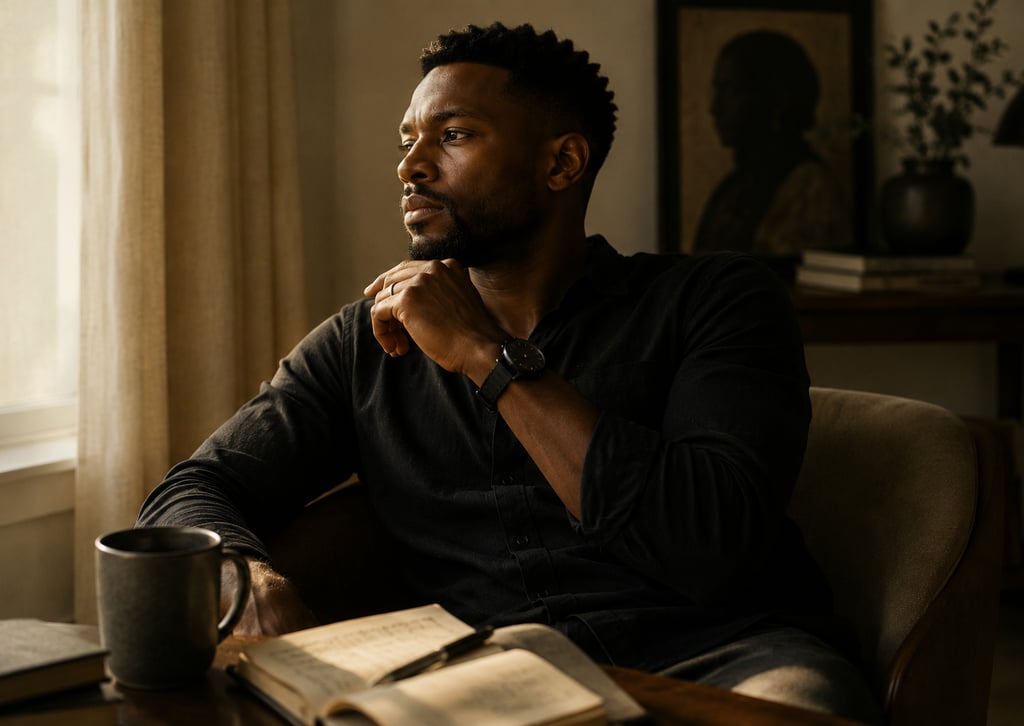
Are you ready to be seen?
Not the version of you that shows up to work. Not the one your friends know. Not the self you have carefully assembled over years of learning what makes people stay and what makes them leave.
The real one. The unguarded one. The one that is tired. Afraid. Still carrying things you have never said out loud to anyone.
That is the self that romantic love comes for.
And nothing — no career success, no spiritual practice, no amount of self-development work — will prepare you for the shock of it.
The Mirror That Has No Off Switch
Here is the truth that changes everything once you really understand it.
Romantic love is not just an emotion. It is the most powerful mirror that exists.
And unlike every other mirror in your life, you cannot choose when to look into it, what angle to approach it from, or when to walk away. Once you are truly in it — once you have let someone past the outer rooms and into the interior of who you are — the mirror is on. All the time. Showing you everything.
It will show you, without mercy and without apology, exactly where you are unhealed.
It will show you what you believe about yourself in your most private moments — not what you say you believe, but what you actually believe. What you think you deserve. What you think you are worth. What you secretly expect people to eventually do to you.
It will surface every strategy you developed as a child to stay safe — the over-functioning, the people-pleasing, the shutting down, the performing, the making yourself small. All of it. Exposed. Because love, by its nature, is an environment of closeness. And closeness is where the hidden things cannot stay hidden.
You can hide your wounds from your colleagues. You can wear the professional face for eight, ten, twelve hours a day and no one will see behind it.
You can hide your wounds from your friends. You can choose what you share, what you laugh off, what you never mention. You can be known and still be protected.
You can even hide your wounds from yourself — for years, sometimes decades — through busyness, through achievement, through a life so full there is no space for the quiet that would let the pain surface.
But you cannot hide from someone who sleeps beside you.
You cannot hide from someone who sees you at 3am when the performance is completely gone. Who knows what your face looks like when you are scared. Who loves you on an ordinary Tuesday when there is nothing to prove and nothing to gain and nowhere to hide behind the doing.
That person — without trying, without intending it, without even knowing they are doing it — will walk straight into every room inside you that you have kept locked.
Not because they are pushing. Because love opens doors that fear has sealed. That is what it does. That is what it has always done.
The Moment That Determines Everything
And then something happens that most people are not prepared for.
The exposure.
The moment when love has gotten close enough to see the unfinished thing inside you. The wound. The belief. The place where you are not yet whole.
And in that moment, everything depends on one thing:
What does your nervous system do with the feeling of being seen?
If you are growing — if your system has learned, even partially, that vulnerability is survivable — you let them in. You do the terrifying, tender, completely unglamorous work of being known. You say the thing you have never said. You stay when everything in you wants to run. And slowly, excruciatingly slowly, love becomes the thing that reaches into the locked rooms and finally begins to complete the healing.
This is when love transforms people. When it cracks them open and something better, something more alive, something more free, walks out of the breaking.
But if you are in survival — if your nervous system has learned that being truly seen is dangerous, that need makes you a target, that the real you is too much or not enough — something else happens entirely.
You fight. You withdraw. You build a case against the person who got too close, collecting their flaws like evidence, turning them into the problem so you never have to look at your own. Or you flee — emotionally, physically, in a thousand quiet ways — before they can see what you are afraid they will find.
Or you do something even more insidious. You stay. But you find a way to make the relationship small enough that the mirror never fully activates. You keep it surface-level. You keep the real rooms locked. You perform the relationship instead of living inside it.
And then one day you look up and wonder why you feel so alone in it.
The Same Force. The Same Door. Two Completely Different Destinations.
This is the paradox that lives at the center of everything we call love.
It is the same force that transforms people and destroys them. The same mirror. The same closeness. The same invitation into the interior.
It is not that love is safe for some people and dangerous for others. It is not that some people are built for it and others are not.
It is that love brings you to a door.
And what happens next has almost nothing to do with the person you are standing in front of — and almost everything to do with what you have done, or have not yet done, with your own interior.
Two people can stand at that same door. One walks through and finds the greatest expansion of their life — a love that does not diminish them but enlarges them, that sees their rawest self and chooses it, that becomes the ground from which they build everything else.
The other stands at the same door and experiences it as annihilation. The closeness becomes suffocation. The being seen becomes threat. The love — real love, the genuine article — becomes the very thing that activates every unhealed wound and sends the whole structure crashing down.
Same door. Same love. Completely different experience.
Because the door does not determine the outcome.
The person standing in front of it does.
Why We Are Not Taught This
Here is what makes this so urgent, and so heartbreaking.
We are never taught any of this.
We are taught to find love. To keep love. To fight for love. To hold on to love.
We are not taught how to hold love. How to regulate ourselves inside it. How to be seen without flinching. How to stay present when the mirror shows us something we do not want to see.
We are not taught to ask the question that actually matters: What am I bringing into this room? Not what are they bringing. What am I. What is the frequency I am operating from. What does my nervous system believe about what I deserve.
And so we arrive at love — the most complex, most exposing, most transformative human experience that exists — completely unprepared.
We bring our wounds and call them preferences. We bring our defenses and call them standards. We bring our survival patterns and call them personality. We bring our unfinished history and project it onto a person who is simply, innocently, trying to love us.
And then we are shocked when it falls apart. Or when it becomes a battlefield. Or when the person we were so certain was the one begins to feel like the source of every pain.
They are not the source. They are the mirror.
And the mirror is only showing you what was already there.
The Most Important Thing You Will Ever Do
There is a version of your life in which you do this work.
In which you stop long enough to ask: What am I attracting from? What does my body believe love is supposed to feel like? What am I looking for in another person that I have not yet learned to give to myself?
In which you cross — slowly, painfully, with full grief for the identity you are leaving behind — from survival into something else. Something quieter. Something that does not need the chaos to feel alive. Something that can stand in front of the mirror without flinching.
That version of you loves differently. Not less — more. But without the hunger underneath it. Without the performance. Without the unconscious contract that says fix what was broken in me before you.
That version of you does not need love to complete them. They bring something already whole to the table. And wholeness — real wholeness, not the performed kind — attracts differently. It does not grasp. It does not chase. It does not mistake turbulence for depth or anxiety for passion.
It simply knows what it is. And it waits — calmly, without desperation — for what matches.
This is not a romantic idea. It is a neurological one. A spiritual one. A deeply, fiercely practical one.
Because the love you build from that place?
Does not just transform you.
It transforms everyone inside it.
And everything it touches after.
The mirror is not your enemy. It never was. It is the most honest friend you have ever had. The only question is whether you are ready — finally — to look.
Loved. Seen. Prosperous.
LoveLab identity.
Subscribe to our community for updates , news and upcoming events
hello@thelovelabshow.com
+44 79467805470
+237699913417
© 2025. All rights reserved.