
Why Everything Feels Hard in This Country
In this essay, Dylis explores the neuroscience behind creative stagnation in post-traumatic cultures how history lives in our bodies, and why healing is the foundation of innovation.
1/24/20264 min read
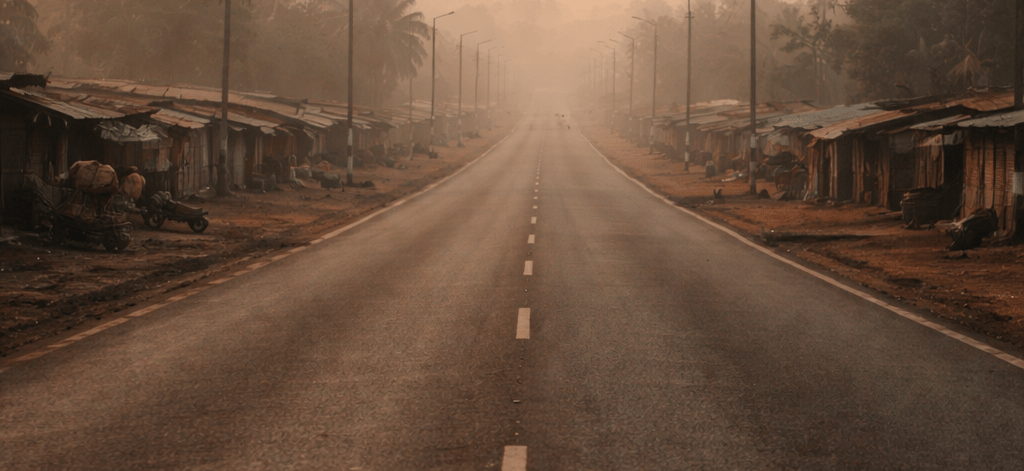
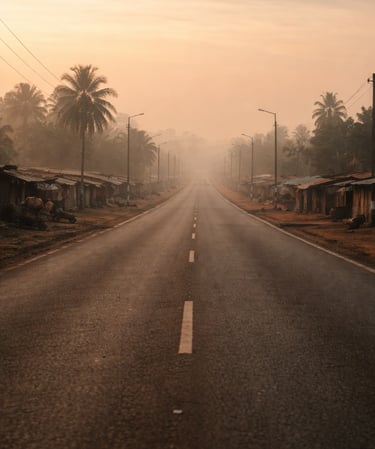
“We repair our roads before we repair our nervous systems.
That’s why we keep walking in circles.”
The Conversation That Sparked It
I recently watched a conversation that stayed with me.
A respected journalist asked an actress why Cameroonian cinema still struggles to hold its audience.
Her response was sharp: “Our movies lack excellence. We produce mediocrity, so people look elsewhere.”
The actress disagreed: “No, the problem is that Cameroonians don’t support their own.”
Both were right.
And both were speaking from pain.
Because beneath that argument lies something deeper than art, money, or marketing.
What we are witnessing isn’t just an artistic or economic problem — it’s biological.
We Are Not Silent — We Are Tired
Cameroon is not a quiet country. It hums, roars, argues, dreams.
The streets are alive with noise — market vendors shouting prices over generators, motorbikes slicing through dust, musicians recording in cramped studios at midnight.
We are not lazy.
We are exhausted.
Decades of survival — wars that never fully ended, unrest that never fully healed, leaders who rule by fear, citizens who live by vigilance — have trained our bodies to stay tense.
We are working hard, yes.
But our biology is working against us.
We are a nation moving fast — with the brakes still on.
How History Wrote Itself Into Our Bodies
Every country has a body. Ours learned to flinch.
Colonialism taught obedience through fear — generations learned that safety meant submission.
Dictatorship reinforced silence — power was to be endured, not shared.
Civil conflict made hyper-vigilance normal — you survive by anticipating danger.
Even when the wars faded, the body didn’t reset.
The adrenaline stayed. The amygdala — the brain’s alarm bell — never switched off.
And when a people live too long in survival, they start to mistake tension for life.
They think chaos means progress.
The nervous system that is always scanning for danger cannot create; it can only defend.
That’s why brilliance burns out before it blooms.
“A society cannot evolve beyond the state of its collective nervous system.”
— The Biology of Chaos
How Survival Looks in Everyday Life
You can see it everywhere if you look closely:
The producer who hides their ideas for fear someone will steal them.
The artist who competes for crumbs instead of collaborating for growth.
The influencer who spends more energy fighting rumours than creating.
The creative who can’t rest because calm feels suspicious — as if peace means weakness.
This isn’t moral failure. It’s neurological conditioning.
The brain remembers what it feels most often.
And when you’ve lived in instability for too long, stress starts to feel like home.
That’s why peace feels strange to us.
We start arguments to feel alive again.
We confuse exhaustion for excellence.
We call stillness “boring,” when it’s actually the frequency of creation.
Leadership and the Loop
Leaders who have never known safety will always lead through control.
That’s the biology of post-colonial power.
From colonial officers to modern bureaucrats, one lesson has been wired into the collective body: authority is danger.
So even when we take power, we repeat the pattern — control, paranoia, domination.
A calm leader looks weak in a traumatised culture.
A reflective leader looks lazy.
A collaborative leader seems naïve.
And so the cycle continues — fear disguised as governance, chaos mistaken for charisma.
Movement Without Momentum
We’re producing, posting, launching, performing — yet it all feels like running in place.
That’s because when a society is stuck in “fight or flight,” movement replaces progress.
In survival mode, we move fast but shallow.
In freeze, we look calm but detached.
Only in regulation — that biological state of safety — do innovation and vision truly awaken.
Without it, every success burns out before it stabilises.
Every partnership collapses under mistrust.
Every creative spark fizzles before it forms a flame.
The problem isn’t talent.
It’s tension.
A nation can’t create while holding its breath.
Why Fixing Roads Isn’t Enough
We pour billions into roads, buildings, and slogans.
We celebrate bridges while our hearts stay barricaded.
We pave over pain instead of processing it.
But no nation can outbuild its biology.
When trauma goes untreated, it leaks — into leadership, art, relationships, and economics.
That’s why every new initiative feels like starting from zero.
You can’t innovate from panic.
You can’t collaborate from fear.
You can’t build peace without nervous system literacy.
The Real Work: Healing Before Building
This isn’t weakness.
It’s capacity.
A calm body can think clearly.
A safe nervous system can innovate.
A peaceful leader can plan beyond ego.
Healing is not sentimental — it’s strategic.
It’s the infrastructure behind every sustainable future.
We need schools that teach emotional regulation as urgently as math.
Workplaces that reward integrity instead of intimidation.
Art that models safety, not survival.
We need to start talking about the nervous system the way we talk about roads — as national infrastructure.
Because when one person learns to breathe calmly, they regulate a home.
When a community learns to co-regulate, they stabilise a city.
And when a generation learns to feel safe, they rebuild a nation.
The New Blueprint
Real progress won’t come from riots or slogans.
It will come from regulation.
The artist who no longer needs chaos to create.
The citizen who can disagree without attacking.
The leader who can hold power without fear.
That’s what freedom feels like — the biology of calm after centuries of crisis.
“We are not lazy. We are not cursed. We are not broken.
We are a nervous system learning to heal — and when we finally rest, we will rise.”
Author’s Note
Dylis Chi is a finance and culture researcher, creative director of LoveLab, and author of The Biology of Chaos, a forthcoming work exploring trauma, leadership, and the neuroscience of culture.
She writes at the intersection of science, spirit, and society — believing that the next revolution in Africa will be biological before it is political.
Loved. Seen. Prosperous.
LoveLab identity.
Subscribe to our community for updates , news and upcoming events
hello@thelovelabshow.com
+44 79467805470
+237699913417
© 2025. All rights reserved.